Alka Melt Drops Official Website › Blog › Butcher’s Broom: The Three-Part Trials
Butcher’s Broom: The Trials, The Dose, And The Ingredient It Was Never Tested Alone Beside
Butcher’s broom carries a real, sizeable clinical trial literature — a meta-analysis of ten trials and 719 patients among it. What that literature almost never tested is butcher’s broom by itself. Reading the actual trials means reading what else was in the capsule.
- Butcher’s broom is Ruscus aculeatus, and its active fraction is a group of steroidal saponins called ruscogenins.
- A 2017 systematic review and meta-analysis pooled 10 randomised placebo-controlled trials across 719 patients and found significant reductions in leg pain, heaviness, swelling and objectively measured ankle circumference.
- Most of that meta-analysis is built on a specific three-ingredient combination — Ruscus extract plus hesperidin methyl chalcone plus vitamin C — not butcher’s broom alone.
- At least one placebo-controlled trial, in 166 women, did test a Ruscus extract by itself over 12 weeks and found real reductions in leg volume and ankle/calf circumference.
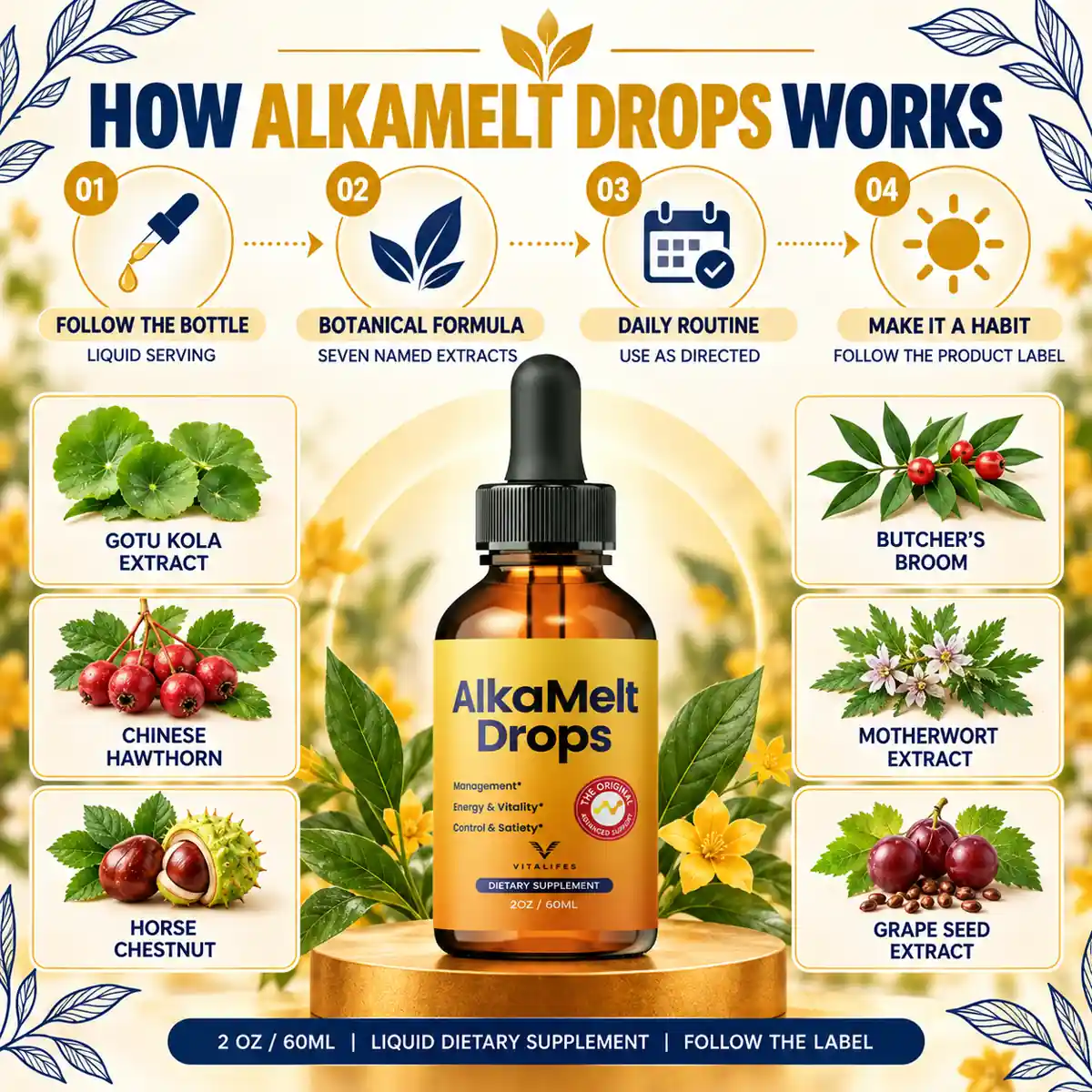
- This pack sheet lists “Butcher’s Broom Extract (root)” with no weight and no combination partners, so neither the combination-product literature nor the standalone trial can be matched to it by dose.
The plant, the part, and ruscogenins
Ruscus aculeatus, commonly called butcher’s broom, is a low evergreen shrub native to the Mediterranean and western Europe, traditionally used by butchers to bundle its stiff, spiny stems into brooms for scrubbing chopping blocks — the origin of its common name. The medicinal preparation is made from the rhizome (the underground stem, often loosely called the root, which is how this pack sheet describes it), and the compound class it is standardised to is ruscogenins, a group of steroidal saponins proposed to tighten venous smooth muscle and reduce capillary permeability.
This pack sheet lists “Butcher’s Broom Extract (root)” as the sixth of its seven named botanicals, with no weight and no ruscogenin percentage given.
The meta-analysis: ten trials, 719 patients
The best single summary of butcher’s broom’s clinical evidence is a 2017 systematic review and meta-analysis in the International Angiology journal, by Kakkos and Allaert. The authors searched MEDLINE and Scopus for randomised, double-blind, placebo-controlled trials of Ruscus extracts in chronic venous disease, identified ten trials meeting that standard, and pooled data from 719 patients.
The results were substantial by the standard of botanical medicine. Compared with placebo, Ruscus significantly reduced leg pain (number needed to treat: 5), heaviness (NNT 2.4), feeling of swelling (NNT 4), paraesthesia (NNT 1.8) and total venous symptoms. On objective measures — not just patient-reported symptoms — Ruscus reduced ankle circumference and leg or foot volume, with standardised mean differences the authors describe as backed by “mostly high quality” evidence under GRADE assessment.
| Outcome | Result vs placebo |
|---|---|
| Leg pain | RR 0.35, P=0.01, NNT 5 |
| Heaviness | RR 0.26, P<0.00001, NNT 2.4 |
| Feeling of swelling | RR 0.53, P<0.0001, NNT 4 |
| Ankle circumference | SMD −0.74 (95% CI −1.01 to −0.47) |
| Leg or foot volume | SMD −0.61 (95% CI −0.91 to −0.31) |
Ten trials, 719 patients, and objective measurements as well as symptom scores. This is a genuinely well-populated corner of botanical evidence.
The combination that most of that evidence is actually about
Here is the detail a label rarely carries forward. Read the meta-analysis’s own title: it describes itself as covering “Ruscus extract, HMC and vitamin C, constituents of Cyclo 3 fort®.” HMC is hesperidin methyl chalcone, a modified citrus flavonoid with its own venous research behind it. The named product, Cyclo 3 fort, and the closely related formulations tested across most of these ten trials combine 150 mg of Ruscus aculeatus extract with 150 mg of hesperidin methyl chalcone and 100 mg of ascorbic acid (vitamin C) in a single capsule, taken twice daily.
So the great majority of that 719-patient, ten-trial result belongs to a specific three-ingredient combination, not to butcher’s broom in isolation. Hesperidin methyl chalcone is not a filler in that formula — it has its own venotonic research history — and vitamin C is not inert in a formulation aimed at vascular tissue either. A separate 2016 review in the same journal, by Allaert, lays out the pharmacology and clinical effects of exactly this three-part combination as a unit, reinforcing that the clinical literature was built and is usually discussed around the combination, not around Ruscus alone.
A label that names “butcher’s broom extract” on its own and implies the weight of this meta-analysis stands behind it has borrowed a result that, for the most part, belongs to a different, three-part product.
Order Alka Melt Drops from the desk that prints both lists
Liquid drops in a 2 oz, 60 mL amber glass bottle. Both of the seller’s ingredient lists appear on the product pages exactly as it publishes them, with the combination products behind each name’s biggest trials named plainly.
Price at checkout on the marketplace listing · money-back guarantee as the listing prints it
Order Alka Melt Drops On The Official Website2 oz / 60 mL a bottle · serving on the bottle · lot ALK-26/GE-2938
The one trial that tested butcher's broom by itself
The picture is not entirely combination-only. A 2002 multi-centre, double-blind, randomised, placebo-controlled trial by Vanscheidt and colleagues, published in Arzneimittelforschung, tested a Ruscus aculeatus rhizome extract on its own — not combined with hesperidin methyl chalcone or vitamin C — against placebo. 166 women with chronic venous insufficiency (Widmer grade I–II) were enrolled, with 148 completing 12 weeks of treatment at what the paper describes as “the recommended daily dosage according to the German monograph.”
The result favoured the Ruscus extract: a significant reduction in leg volume over the 12 weeks (measured as area under the baseline curve), significant reductions in ankle and calf circumference, and significant improvement in the subjective symptoms of heavy, tired legs and a sensation of tension. Overall efficacy assessment favoured the extract over placebo, and tolerability was rated good to very good in both arms.
| Vanscheidt 2002 trial | Detail |
|---|---|
| Preparation | Ruscus aculeatus rhizome extract, alone (no HMC, no vitamin C) |
| Dose | German Commission E monograph-recommended daily amount |
| Patients | 166 randomised, 148 completed intent-to-treat analysis; all women, CVI Widmer grade I–II |
| Duration | 12 weeks |
| Result | Significant reduction in leg volume, ankle/calf circumference, and symptom scores vs placebo |
This is the trial worth citing for butcher’s broom specifically, as opposed to the three-part combination.
This desk was not able to trace an exact milligram figure for the German Commission E monograph dose from the trial report itself, so it is stated here as the trial described it — a monograph-based standard amount — rather than as a specific number this page cannot independently verify. That is a real limitation of what can be reported here, and it is stated rather than papered over with an invented figure.
What the standalone and combination results have in common
Set the two literatures side by side and a pattern holds across both: the outcomes measured are leg volume, ankle and calf circumference, and venous symptom scores — heaviness, pain, swelling, tingling. Not one trial in either the combination-product meta-analysis or the standalone Vanscheidt trial measured body weight, appetite or metabolic rate as an outcome.
That is the same observation this desk has made about horse chestnut, and it applies here for the same structural reason: butcher’s broom belongs to the chronic venous insufficiency literature, a real and reasonably well-developed field of botanical medicine, aimed at legs rather than at metabolism.
Where butcher's broom sits among this bottle's other five names
On the evidence-strength spectrum this desk has been mapping across this pack sheet, butcher’s broom sits closer to the horse chestnut end than to the stone root end: a real, multi-trial, partly-combination clinical literature with at least one standalone placebo-controlled trial behind it, rather than an absence of modern human research. The caveat that matters most is not that the evidence is weak, but that most of its scale comes from a three-ingredient product this bottle does not claim to contain.
Reading a butcher's broom row on any label
Four questions, and they take under a minute.
- Is it alone, or with hesperidin and vitamin C? Most of the largest trial base belongs to the three-part combination. A label naming butcher’s broom alone should not be credited with that combination’s full result.
- Is a ruscogenin percentage given? That is the standardised marker for the rhizome extract, and without it a weight figure alone cannot be compared to any trial.
- Is a monograph or milligram dose stated? The standalone trial used “the recommended daily dosage according to the German monograph” — a real, checkable standard, even without a milligram figure quoted in the trial report itself.
- Does the outcome claimed match the outcome measured? Leg volume and ankle circumference, not body weight, are what this literature is evidence for.
Grape seed and hesperidin-class flavonoids turn up together in venous literature too, and gotu kola’s largest trials used a specific triterpenic-fraction extract rather than a generic gotu kola powder. Checking whether a cited trial tested the single named ingredient, or a specific branded combination, is worth doing on every row of a formula like this one, not only on butcher’s broom.
What that means for this bottle
This pack sheet names butcher’s broom extract (root) with no weight, no ruscogenin percentage, and no indication of whether hesperidin methyl chalcone or vitamin C are present in a comparable amount. So neither the ten-trial combination-product meta-analysis nor the 12-week Vanscheidt standalone trial can be matched to this specific bottle by dose.
What can be said honestly: butcher’s broom is one of the better-evidenced names on this seller’s list, provided the evidence is read for what it is — mostly a three-ingredient combination literature, with a real standalone trial sitting underneath it. This site’s ingredients page prints that same distinction beside every named botanical here.
References
- Kakkos SK, Allaert FA. Efficacy of Ruscus extract, HMC and vitamin C, constituents of Cyclo 3 fort®, on improving individual venous symptoms and edema: a systematic review and meta-analysis of randomized double-blind placebo-controlled trials. Int Angiol. 2017;36(2):93-106. PMID 28225220. https://pubmed.ncbi.nlm.nih.gov/28225220/
- Vanscheidt W, Jost V, Wolna P, Lücker PW, Müller A, Theurer C, Patz B, Grützner KI. Efficacy and safety of a Butcher's broom preparation (Ruscus aculeatus L. extract) compared to placebo in patients suffering from chronic venous insufficiency. Arzneimittelforschung. 2002;52(4):243-50. PMID 12040966. https://pubmed.ncbi.nlm.nih.gov/12040966/
- Allaert FA. Combination of Ruscus aculeatus extract, hesperidin methyl chalcone and ascorbic acid: a comprehensive review of their pharmacological and clinical effects and of the pathophysiology of chronic venous disease. Int Angiol. 2016;35(2):111-6. PMID 26928296. https://pubmed.ncbi.nlm.nih.gov/26928296/