Alka Melt Drops Official Website › Ingredients
IngredientsAlka Melt Drops Ingredients
Eleven botanical names are printed for Alka Melt Drops, across two graphics from the same seller that share no entry.
Seven sit on the ingredient artwork: gotu kola, Chinese hawthorn, horse chestnut, stone root, motherwort, butcher’s broom and grape seed. Four sit on the “What’s Inside” panel: apple cider vinegar, raspberry ketones, wild yam and bitter melon. This page takes all eleven in turn.
The species, the plant part, the material and the marker that would make each row checkable.
Which list is which on an Alka Melt Drops bottle?
Eleven names, which of the seller’s two graphics carries each, and the botanical identity behind it.
| Name | Printed on | Species | Part used |
|---|---|---|---|
| Gotu Kola Extract | Ingredient graphic | Centella asiatica | Leaf |
| Chinese Hawthorn Extract | Ingredient graphic | Crataegus pinnatifida | Fruit |
| Horse Chestnut Extract | Ingredient graphic | Aesculus hippocastanum | Seed |
| Stone Root Extract | Ingredient graphic | Collinsonia canadensis | Root |
| Motherwort Extract | Ingredient graphic | Leonurus cardiaca | Aerial parts |
| Butcher’s Broom Extract | Ingredient graphic | Ruscus aculeatus | Root |
| Grape Seed Extract | Ingredient graphic | Vitis vinifera | Seed |
| Apple Cider Vinegar | What’s Inside artwork | Malus domestica, fermented | Fruit juice |
| Raspberry Ketones | What’s Inside artwork | 4-(4-hydroxyphenyl)butan-2-one | A single compound |
| Wild Yam Extract | What’s Inside artwork | Dioscorea villosa | Root |
| Bitter Melon Extract | What’s Inside artwork | Momordica charantia | Fruit |
Species and plant parts are the standard botanical identities for the names the seller prints. The seller’s own graphics give the names and the parts in brackets where it gives them at all; the Latin binomials are added here so each row can be looked up.
Two things in that table are worth noticing before anything else. The first is that the plant part is the more useful column: nettle, valerian and yam are all sold in forms whose research does not transfer between them, and a name without a part is half an ingredient. The seller does better than much of this category here, printing leaf for gotu kola, fruit for hawthorn and root for stone root and butcher’s broom.
The second is that one row is not a plant at all. Raspberry ketone is a single aromatic compound, and although it occurs naturally in raspberries the amount in any supplement is made in a reactor rather than extracted from fruit. Calling it a botanical is a stretch the artwork makes and this page does not.
What the Alka Melt Drops botanicals were each studied to measure
Five clusters and a null, sorted by the outcome each body of research set out to move.
Group the eleven by the thing their research actually measured, rather than by which graphic prints them, and the shape of this formula changes completely. Five clusters come out, and only one of them is about body weight.
Leg volume, ankle circumference and capillary filtration
Gotu kola, horse chestnut, butcher’s broom and grape seed. This is the chronic venous insufficiency literature, and it is the largest and best-run body of evidence attached to any name on either list. The Cochrane review of phlebotonics is the anchor. What it measures is oedema, not mass.
Exercise tolerance and cardiac symptom scores
Chinese hawthorn, and motherwort at one remove. The hawthorn review pools trials whose primary outcomes are maximal workload and symptom burden in heart failure. That is a clinical population and a clinical endpoint, neither of which describes anyone buying a dropper bottle.
Fasting glucose and insulin response
Bitter melon, with vinegar overlapping. The pooled bitter melon work measures glycaemia in people with type 2 diabetes. It is real evidence about a real endpoint, and it is the reason anyone on a glucose-lowering medicine belongs on the suitability page before the first serving.
Body weight and waist measurement
Apple cider vinegar alone. The 2025 meta-analysis is the only pooled human weight evidence attached to any name on either of these two lists, and it sits at the 30 mL a day end of the trials it pools. One name out of eleven.
Nothing measured in people at all
Stone root and raspberry ketones. A live search of the indexed record turns up one paper on the first, a cell-line screen, and no human trial of the second at any dose. A 2021 review sets out what the second one’s pharmacology rests on, which is animals.
A clean null result
Wild yam. A randomised placebo-controlled cross-over trial measured weight, blood pressure, lipids, glucose and three hormones and found no change in any of them. That is more informative than an absence of research, and it belongs in a different column from the two above.
The eleven Alka Melt Drops ingredients, one material at a time
What each name is as a raw material, and what a supplier would have to state for the row to mean something.
Gotu Kola Extract
Centella asiatica, leafIngredient graphicThe material behind this name is a leaf extract standardised to its total triterpenic fraction, usually abbreviated TTFCA and made up of asiaticoside, asiatic acid and madecassic acid. That fraction is the reason the plant has a dose-response at all, and it is what the chemistry and pharmacology review tracks through the literature. A row that printed “standardised to 40 per cent triterpenes” would be checkable; a row that prints only the plant name is not.
Chinese Hawthorn Extract
Crataegus, fruitIngredient graphicHawthorn material is sold either as a fruit extract or as a leaf-and-flower extract, and the cardiac research is built almost entirely on one standardised leaf-and-flower preparation. The seller prints fruit. That is a legitimate material with its own traditional use, and it is not the one the dose-comparison trial ran. The marker to look for on a checkable row would be a procyanidin or flavonoid percentage.
Horse Chestnut Extract
Aesculus hippocastanum, seedIngredient graphicThe only material on either list whose active fraction has an agreed name, an agreed assay and an agreed daily figure. Seed extract is standardised to escin, and the escin review describes the anti-oedema and venotonic pharmacology behind it. Because that convention exists, a label printing “horse chestnut seed extract, standardised to 16 to 20 per cent escin” tells a reader almost everything. This one prints the name.
Stone Root Extract
Collinsonia canadensis, rootIngredient graphicA North American mint-family root with a long place in nineteenth-century eclectic practice and essentially no modern pharmacology. There is no accepted marker compound, no monograph, no assay and no standardised commercial material with a stated potency. It is the one name here where even a printed milligram figure would not make the row checkable, because there would be nothing to check it against.
Motherwort Extract
Leonurus cardiaca, aerial partsIngredient graphicAerial parts are cut above ground at flowering, and the characteristic constituents are the iridoid glycosides and alkaloids the pharmacological review catalogues. The single clinical study used an oil extract, which is a specific and fairly unusual preparation rather than the common dried herb or hydroalcoholic tincture. Preparation, not just plant part, is the variable here.
Butcher’s Broom Extract
Ruscus aculeatus, rootIngredient graphicRoot and rhizome, standardised where it is standardised at all to ruscogenins, the steroidal saponins that carry its venous activity. A 2022 review of ruscus and leg oedema covers the material and the preparations in commerce. The awkwardness with this one runs deeper than a missing figure: even its own trial states a monograph dose rather than a number.
Grape Seed Extract
Vitis vinifera, seedIngredient graphicSeed, not skin, and the distinction matters commercially: skin extracts are sold for resveratrol and seed extracts for oligomeric proanthocyanidins. Seed material is usually standardised to a proanthocyanidin percentage, and the pooled blood-pressure work draws on preparations described that way. NCCIH is the plainest summary of where the evidence sits overall.
Apple Cider Vinegar
acetic acid, 5 per cent by conventionWhat’s InsideThe one row on either list where the active is a simple molecule at a known concentration. Table vinegar runs at about 5 per cent acetic acid, so the 15 mL and 30 mL doses in the 12-week trial correspond to roughly 750 mg and 1,500 mg of acetic acid a day. Those are gram quantities, which is the fact that makes a 60 mL dropper bottle an awkward vehicle for them.
Raspberry Ketones
4-(4-hydroxyphenyl)butan-2-oneWhat’s InsideA single synthesised compound rather than an extract, which means there is no plant part, no extract ratio and no standardisation question. Purity and amount are the only two variables, and this label states neither. The best-controlled animal study is the reason it appears on the mechanism page under a proposed pathway rather than a demonstrated one.
Wild Yam Extract
Dioscorea villosa, rootWhat’s InsideRoot material standardised, where it is, to diosgenin. Diosgenin is a starting material that chemists convert to steroid hormones in a factory, and the human body does not perform that conversion. That single fact explains both why the ingredient became popular and why the one proper trial found nothing moving.
Bitter Melon Extract
Momordica charantia, fruitWhat’s InsideUnripe fruit, usually dried and powdered or extracted, and sold in forms that range from juice to a concentrated extract with very different potencies. The 2,000 mg-a-day trial used a specific preparation over three months. Without a form and a figure, a row reading “bitter melon extract” could be anything from a flavouring trace to a clinical amount.
What a checkable Alka Melt Drops ingredient row would carry
Five fields, what each one is for, and which of them this bottle carries.
A supplement row is checkable when five fields are present. They are not arbitrary: each one closes a specific way that a name on a panel can fail to describe what is in the bottle.
| Field | Why it closes a gap | On this label |
|---|---|---|
| Species, in Latin | Common names cover several plants. “Hawthorn” alone covers a dozen Crataegus species with different constituent profiles. | Common names only |
| Plant part | Root and leaf of one plant are two ingredients with two evidence bases. This is the field most often dropped. | Given for most of the seven |
| Preparation and extract ratio | A 10:1 extract is ten times the plant material per gram of a 1:1. Without the ratio, a weight means nothing. | Not given for any |
| Standardised marker and percentage | Escin for horse chestnut, triterpenes for gotu kola, proanthocyanidins for grape seed. This is what the trials dosed by. | Not given for any |
| Amount per serving | The figure everything else is multiplied against, and the one a reader can set beside a trial. | Not given for any |
The right-hand column is read off the seller’s own front-label artwork and both ingredient graphics as they stood on 19 September 2026.
Two of the five are present here and three are not, which puts this bottle in the middle of its category rather than at the bottom of it. Plenty of liquid formulas print a plant name and nothing else. What makes this one unusual is not the missing figures, which are common; it is that two of the seller’s own graphics disagree about which eleven names the figures would belong to.
Why the Alka Melt Drops format changes how the list should be read
What a dropper bottle can hold, and why the order of the names tells you nothing.
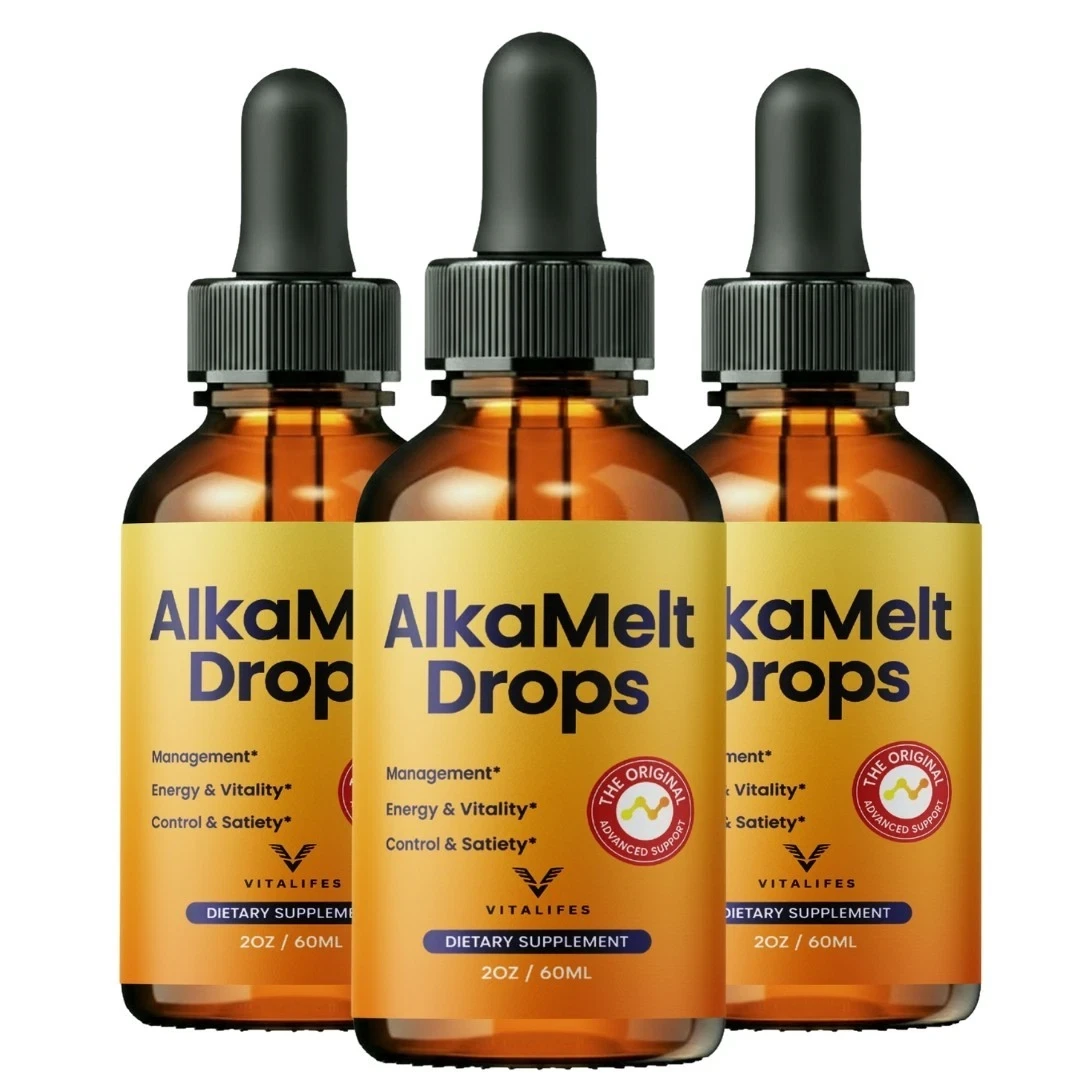
A capsule holds dry powder, so the amount of an ingredient it can carry is limited by the volume of the shell. A liquid holds whatever the solvent will dissolve and keep dissolved, which is both more generous and much less predictable.
Botanical liquids are made one of three ways. A tincture steeps plant material in an alcohol and water mixture and is usually described as a ratio such as 1:5. A fluid extract concentrates that down towards 1:1. A glycerite swaps the alcohol for vegetable glycerin, which tastes better and extracts fewer of the resinous constituents.
Those three routes produce materials that differ by an order of magnitude in strength, and nothing on this label or in the seller’s artwork says which route was taken. The amber glass and the dropper are consistent with all three.
The practical consequence is that the eleven names on this page cannot be ranked by importance. In a printed panel the order of the rows and the size of the figures tell you what the formula is mostly made of. Here, the order on the graphic is a design decision.
Honest label analysis: what the two Alka Melt Drops lists cannot settle
The one question this page cannot answer, stated once and kept here.
Everything above describes the materials the seller names. This section is about the limit of that exercise, and it is kept here rather than repeated on every page.
Two graphics from one seller, photographed against the same bottle, name eleven botanicals between them and share none. One of them sets the words “seven named botanical extracts” into the artwork as a statement of fact. Both cannot describe the liquid in the bottle, and there is no Supplement Facts panel anywhere in the pack to decide it.
That leaves three possibilities and no way to choose between them. The seven could be the formula and the four an artwork error. The four could be the formula and the seven a description of an earlier version. Or the bottle could contain some of each, in which case neither graphic is right.
- Print both lists, in full, exactly as the seller prints them. That is done on this page and on the home page.
- Give each of the eleven names the same treatment: species, part, material, and what its research measured.
- Set every named botanical beside the amount its published trials used, which is on the home page rather than repeated here.
- Decline to rank the lists, weight them, or describe one as the main formula. Nothing published would support that.
- Say plainly, once per page and in the section whose job it is, that the bottle in your hand is the only authority on which list is right.
Marketing photography is taken once and reused for years, and a physical bottle can carry a back label the shots were never taken of. If yours does, read it. It outranks both graphics, this website and the marketplace listing. The directions and the caution are on the bottle itself. The front label artwork carries neither, so read the bottle you receive before the first serving.
Alka Melt Drops ingredient questions
How many ingredients does Alka Melt Drops have?
Eleven names appear across the seller’s two graphics: seven on the ingredient artwork and four different ones on the “What’s Inside” panel. No name appears on both, so the honest answer is either seven or four depending on which graphic describes the bottle, and the seller has not said which.
Which plant parts are used?
Leaf for gotu kola, fruit for Chinese hawthorn and bitter melon, seed for horse chestnut and grape, root for stone root, butcher’s broom and wild yam, aerial parts for motherwort. Apple cider vinegar is a fermented juice and raspberry ketone is a single compound rather than a plant material at all.
Is there alcohol in it?
The artwork does not say. Botanical liquids are typically made with an alcohol and water mixture, with vegetable glycerin as the usual alcohol-free alternative. Anyone avoiding alcohol should read the bottle received or call the order desk on +1 (302) 200-3480 before opening it.
Is it vegan, gluten-free or allergen-free?
No badge on this pack makes any of those three statements, and none is printed on the front label. A seal that is absent is not a claim that has been denied, but it is also not a claim you can rely on. The seals that do ship with this pack are read one at a time on the testing and quality page.
Why is raspberry ketone described as a compound rather than an extract?
Because that is its chemistry. It occurs in raspberries at a few parts per million, which makes extraction commercially impossible, so supplement-grade material is synthesised. The molecule is identical either way; the description on the artwork simply implies a fruit origin the industry does not use.
Does a longer ingredient list mean a better formula?
Not on its own. A liquid has a fixed volume, so every additional name shares the same 60 mL, and a list can grow without anything in the bottle growing with it. Breadth is worth having when each row carries an amount; without amounts it is a design choice rather than a measurable one.
Where can I see the seller's own ingredient graphics?
Both are reproduced on the home page, side by side, at the size they were supplied at. The seven-name graphic and the four-name panel are printed together there deliberately, so nobody has to take one on trust.
Sources behind the Alka Melt Drops ingredient list
Every study named above, in the order the seller lists the ingredient it belongs to.
- Torbati FA, et al. Ethnobotany, Phytochemistry and Pharmacological Features of Centella asiatica: A Comprehensive Review. Adv Exp Med Biol. 2021;1308:451-499. PMID 33861456. https://pubmed.ncbi.nlm.nih.gov/33861456/
- Tauchert M. Efficacy and safety of crataegus extract WS 1442 in comparison with placebo in patients with chronic stable New York Heart Association class-III heart failure. Am Heart J. 2002;143(5):910-5. PMID 12040357. https://pubmed.ncbi.nlm.nih.gov/12040357/
- Pittler MH, Guo R, Ernst E. Hawthorn extract for treating chronic heart failure. Cochrane Database Syst Rev. 2008;2008(1):CD005312. PMID 18254076. https://pubmed.ncbi.nlm.nih.gov/18254076/
- Gallelli L. Escin: a review of its anti-edematous, anti-inflammatory, and venotonic properties. Drug Des Devel Ther. 2019;13:3425-3437. PMID 31631970. https://pubmed.ncbi.nlm.nih.gov/31631970/
- Shang X, et al. Leonurus japonicus Houtt.: ethnopharmacology, phytochemistry and pharmacology of an important traditional Chinese medicine. J Ethnopharmacol. 2014;152(1):14-32. PMID 24412548. https://pubmed.ncbi.nlm.nih.gov/24412548/
- Bihari I, et al. Clinical Perspectives and Management of Edema in Chronic Venous Disease - What about Ruscus? Medicines (Basel). 2022;9(8):41. PMID 35893088. https://pubmed.ncbi.nlm.nih.gov/35893088/
- Zhang H, et al. The impact of grape seed extract treatment on blood pressure changes: A meta-analysis of 16 randomized controlled trials. Medicine (Baltimore). 2016;95(33):e4247. PMID 27537554. https://pubmed.ncbi.nlm.nih.gov/27537554/
- Grape Seed Extract. National Center for Complementary and Integrative Health, National Institutes of Health. https://www.nccih.nih.gov/health/grape-seed-extract
- Martinez-Zapata MJ, Vernooij RW, Simancas-Racines D, et al. Phlebotonics for venous insufficiency. Cochrane Database Syst Rev. 2020;11(11):CD003229. PMID 33141449. https://pubmed.ncbi.nlm.nih.gov/33141449/
- Kondo T, Kishi M, Fushimi T, Ugajin S, Kaga T. Vinegar intake reduces body weight, body fat mass, and serum triglyceride levels in obese Japanese subjects. Biosci Biotechnol Biochem. 2009;73(8):1837-43. PMID 19661687. https://pubmed.ncbi.nlm.nih.gov/19661687/
- Castagna A, Ferro Y, Noto FR, et al. Effect of Apple Cider Vinegar Intake on Body Composition in Humans with Type 2 Diabetes and/or Overweight: A Systematic Review and Meta-Analysis of Randomized Controlled Trials. Nutrients. 2025;17(18):3000. PMID 41010525. https://pubmed.ncbi.nlm.nih.gov/41010525/
- Cotten BM, et al. Raspberry ketone fails to reduce adiposity beyond decreasing food intake in C57BL/6 mice fed a high-fat diet. Food Funct. 2017;8(4):1512-1518. PMID 28378858. https://pubmed.ncbi.nlm.nih.gov/28378858/
- Rao S, et al. Pharmacological Exploration of Phenolic Compound: Raspberry Ketone-Update 2020. Plants (Basel). 2021;10(7):1323. PMID 34209554. https://pubmed.ncbi.nlm.nih.gov/34209554/
- Komesaroff PA, Black CV, Cable V, Sudhir K. Effects of wild yam extract on menopausal symptoms, lipids and sex hormones in healthy menopausal women. Climacteric. 2001;4(2):144-50. PMID 11428178. https://pubmed.ncbi.nlm.nih.gov/11428178/
- Peter EL, et al. Momordica charantia L. lowers elevated glycaemia in type 2 diabetes mellitus patients: Systematic review and meta-analysis. J Ethnopharmacol. 2019;231:311-324. PMID 30385422. https://pubmed.ncbi.nlm.nih.gov/30385422/
- Cortez-Navarrete M, et al. Momordica charantia Administration Improves Insulin Secretion in Type 2 Diabetes Mellitus. J Med Food. 2018;21(7):672-677. PMID 29431598. https://pubmed.ncbi.nlm.nih.gov/29431598/
- Mazzio E, et al. High throughput screening of natural products for anti-mitotic effects in MDA-MB-231 human breast carcinoma cells. Phytother Res. 2014;28(6):856-67. PMID 24105850. https://pubmed.ncbi.nlm.nih.gov/24105850/
Order Alka Melt Drops with both ingredient lists in front of you
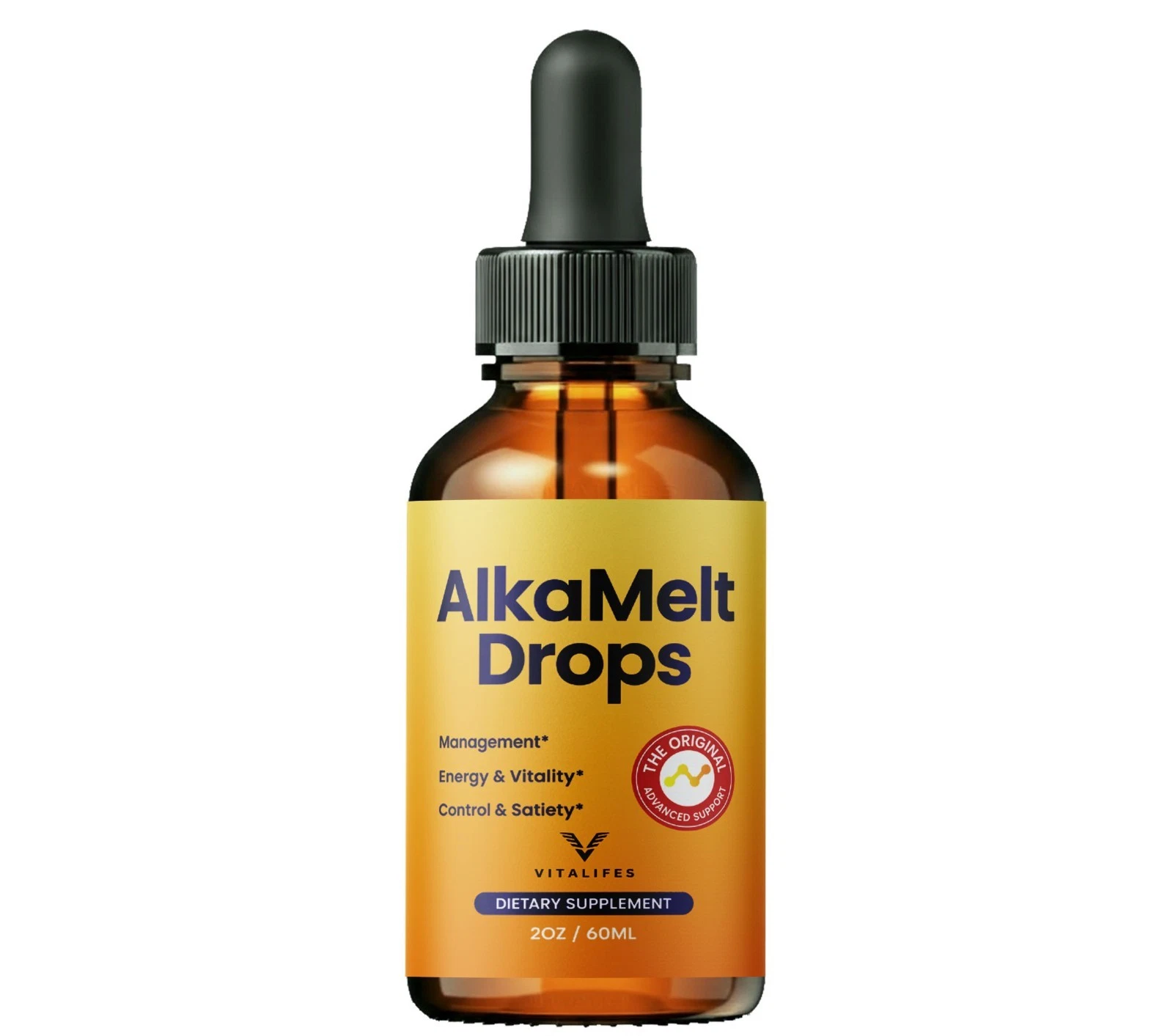
Three pack sizes of the 2 oz, 60 mL dropper bottle, priced at the marketplace checkout and shipped from the United States.
Price at checkout on the marketplace listing · money-back guarantee as the listing prints it
Order Alka Melt Drops On The Official Website2 oz / 60 mL a bottle · serving on the bottle · lot ALK-26/GE-2938