Alka Melt Drops Official Website › Blog › What Two Millilitres Can Carry
What Two Millilitres A Day Can Actually Carry
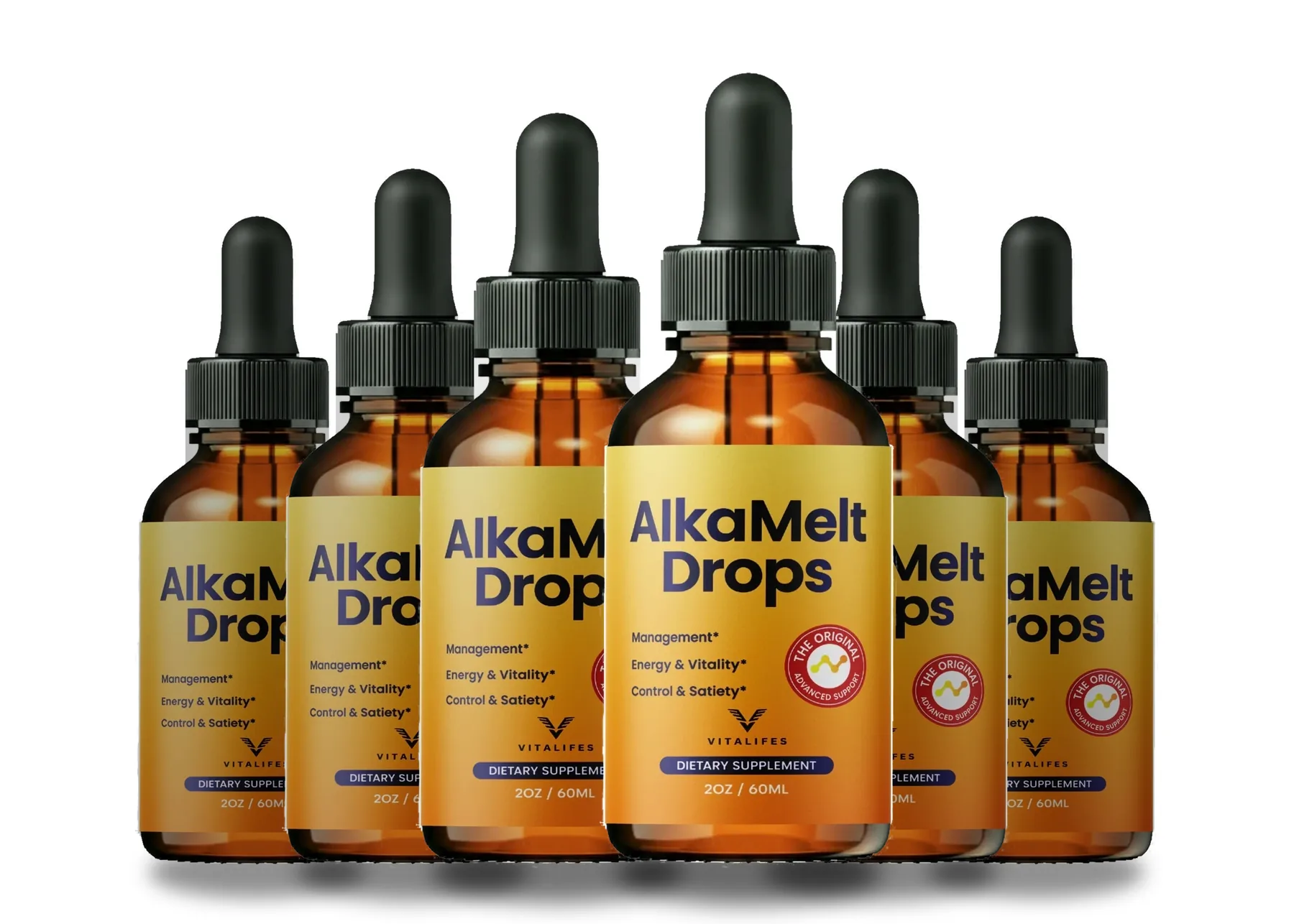
This bottle publishes exactly one number: 60 mL. Spread over a month that is about 2 mL a day, roughly forty drops, and around two grams of liquid. Set that beside the amounts the published trials behind these botanicals actually used, and the arithmetic becomes the most informative thing available about the product.
The one number on the bottle
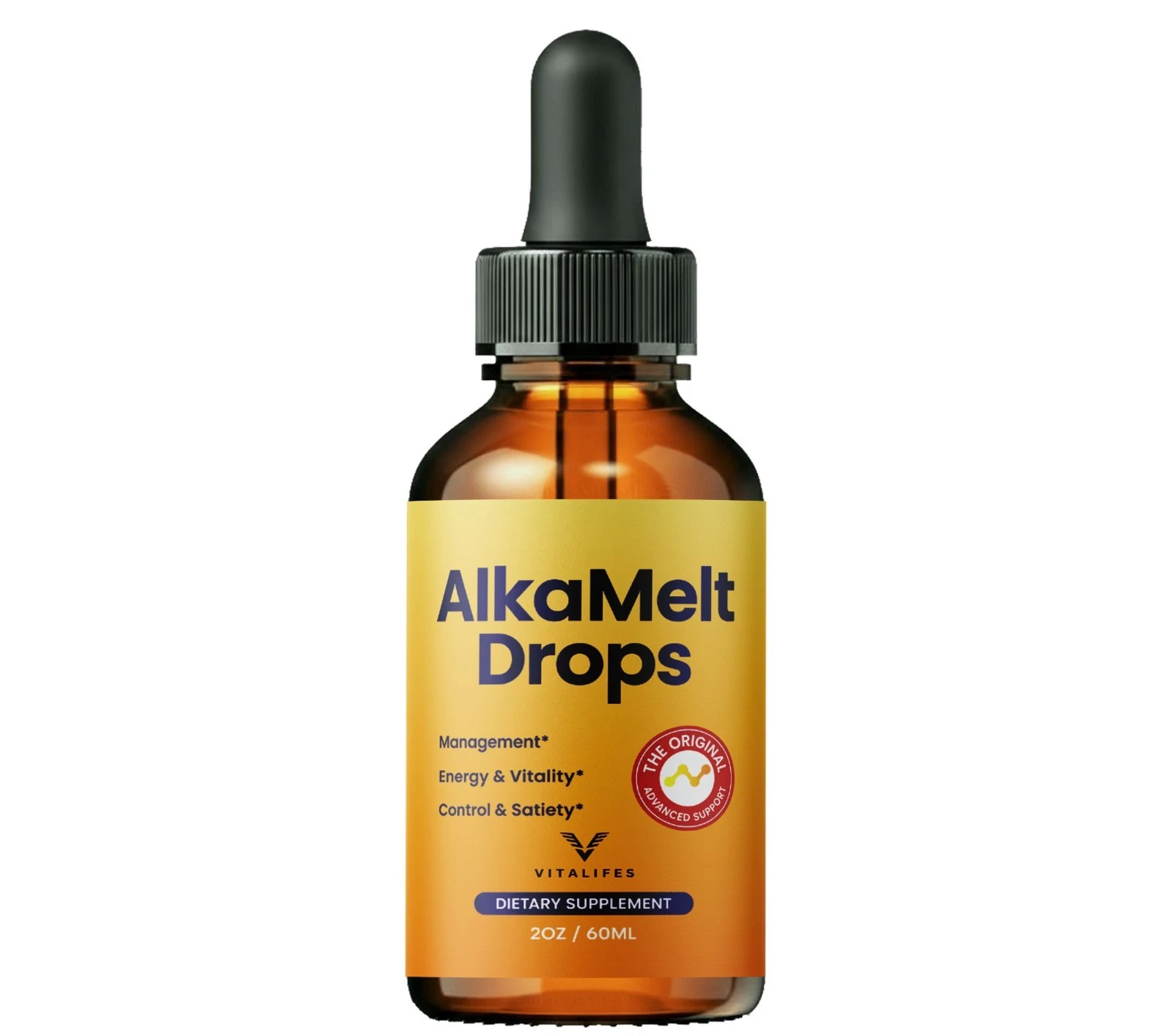
The front label prints the net contents and nothing else that is quantitative: 2OZ / 60ML. There is no serving size, no number of servings, and no amount against any ingredient, because there is no Supplement Facts panel anywhere in the seller’s materials.
One number is still something to work with. A supplement bottle is conventionally a month’s supply, the seller’s own pack ladder is built in multiples that suit a monthly rhythm, and its buyers describe a daily habit. On that reading, 60 mL over 30 days gives about 2 mL a day.
| The figure | Where it comes from | What follows from it |
|---|---|---|
| 60 mL | Printed on the front label as 2OZ / 60ML | The only quantity the bottle publishes |
| about 2 mL a day | 60 mL spread across a 30-day month | The working serving, if the bottle is meant to last a month |
| about 40 drops | 2 mL at the standard 20 drops per millilitre | What a dropper actually delivers in a morning |
| about 2 g | 2 mL of a mostly aqueous liquid | The total mass available for everything the serving carries |
| 11 named botanicals | Seven on one seller list, four on another | The mass above has to be shared, if both lists are real |
Every row here is arithmetic on published figures. None of it describes a concentration, because no concentration has been published.
Two millilitres is a little under half a teaspoon. At the pharmacy convention of twenty drops to the millilitre it is about forty drops, which matches how people describe using a dropper of this size. And two millilitres of a mostly aqueous liquid weighs about two grams.
Two grams is the ceiling. Everything the serving delivers — every extract, the solvent it is carried in, any glycerine, any preservative, any flavouring — has to fit inside it.
What the trials behind these names used
Now set that two grams beside the published research. Each figure below is the amount a specific trial gave its participants, every day, for the length of the study. None of them is a claim about this bottle.
| Botanical | What its trial used, per day | As a share of a 2 mL serving |
|---|---|---|
| Chinese hawthorn (WS 1442) | 1,800 mg of extract | More than the entire serving weighs, several times over |
| Bitter melon | 2,000 mg of fruit preparation | More than the entire serving weighs, several times over |
| Motherwort | 1,200 mg of oil extract | Roughly half the serving, on its own |
| Gotu kola | 180 mg of total triterpenes | Plausible in isolation; the triterpene fraction is a concentrate |
| Horse chestnut | 100 mg of escin, as 50 mg twice daily | Plausible in isolation, for the same reason |
| Apple cider vinegar | 30 mL of liquid vinegar | Fifteen times the whole serving |
Two millilitres of water weighs about two grams. The right-hand column compares each trial amount with that, and every figure in the middle column is an amount a published study used, not an amount in this or any bottle.
The hawthorn dose-comparison trial is the one to read first, because it tested two amounts against each other. Eighteen hundred milligrams a day of the WS 1442 extract beat placebo on maximal workload. Nine hundred milligrams a day did not. Half the dose was not half the benefit; it was no measurable benefit at all.
The bitter melon trial used 2,000 mg a day for three months. The vinegar trial used 15 mL or 30 mL of liquid vinegar a day for twelve weeks, and the pooled effect sits at the 30 mL end. Thirty millilitres is fifteen whole daily servings of this dropper, of vinegar alone.
Two of the figures are more modest. The gotu kola trial used 180 mg a day of the total triterpenic fraction, and the horse chestnut trial used 100 mg a day of escin. Both are concentrates rather than ground plant, and both are small enough that two grams could hold them — one at a time.
Why an extract changes the sum, and how far
An objection arrives at about this point, and it is a fair one: these are extracts, not ground leaves. A 10:1 extract concentrates ten kilograms of plant into one, so surely the milligram figures above are the wrong comparison.
Partly. Concentration is exactly why gotu kola and horse chestnut are plausible in this format at all — the trials themselves used standardised fractions rather than raw plant. But concentration has two limits, and both apply here.
The trials used extracts too
Every dose in the table above is an extract dose, not a plant dose. The 1,800 mg of hawthorn is 1,800 mg of WS 1442, a standardised extract with a defined marker content. Concentrating further does not make 1,800 mg into 180 mg; it makes a different preparation whose relationship to the tested one is unknown until somebody measures it.
The ratio is not published
No extract ratio, no marker standardisation and no amount appears anywhere in this seller’s materials. A reader who wants to run the concentration argument properly needs a number to run it on, and no number has been published. The NIH Office of Dietary Supplements consumer guidance is written on the assumption that a label carries one.
What a liquid can and cannot hold
There is a physical limit as well as an arithmetic one, and it is the reason dropper formats tend to carry fewer actives than capsules.
- Solubility. A botanical extract has to dissolve or stay suspended in whatever carries it. Some do this readily in water or glycerine; others need alcohol, and several of the resinous fractions are awkward in any of them.
- Stability. A liquid sitting in a warm bathroom for a month is a harder environment than a sealed capsule. Amber glass helps with light; it does nothing about temperature.
- Taste. Bitter compounds concentrate badly in a small volume, and something has to mask them. Whatever does that also occupies part of the two grams.
- Crowding. Every additional active competes for the same solvent. This is the practical reason liquid formulas usually carry two or three actives rather than eleven.
Two grams a day cannot simultaneously carry 1,800 mg of hawthorn extract, 2,000 mg of bitter melon, 1,200 mg of motherwort, 180 mg of gotu kola triterpenes and 100 mg of escin at the amounts those trials used. That is arithmetic rather than an opinion about the seller.
Order Alka Melt Drops from the desk that prints both lists
Liquid drops in a 2 oz, 60 mL amber glass bottle. Both of the seller’s ingredient lists appear on the product pages exactly as it publishes them, with the amount each named botanical’s trials used printed beside it.
Price at checkout on the marketplace listing · money-back guarantee as the listing prints it
Order Alka Melt Drops On The Official Website2 oz / 60 mL a bottle · serving on the bottle · lot ALK-26/GE-2938
The fairest reading of the arithmetic
The fair conclusion is not that the bottle is water, and this page is not an accusation. It is that a 2 mL serving cannot deliver trial-level amounts of eleven botanicals at once, and so one of a small number of things must be true.
- The serving is larger than 2 mL, and the bottle lasts less than a month. That is entirely possible, and the bottle that arrives will say so if it says anything.
- Fewer ingredients are present than the two lists between them name. The two lists already disagree about which, so this is not a hostile reading — it follows from the seller’s own materials.
- The amounts present are below the ones the trials used. Which is the ordinary condition of most of this category, and is only a problem when a product borrows a trial’s credibility without its dose.
- The extracts are concentrated far beyond the tested preparations. Possible, and unverifiable without a ratio, a marker and a panel.
Any of those four is a legitimate answer. What is not available is a way to tell which, because the one document that would say is the one that has not been published.
How to use this when comparing products
The method here works on any bottle, and it takes about a minute.
- Find the serving size and the net contents. Divide one into the other to get the number of servings, and check it against the supply the seller claims.
- Convert the serving to a mass. Two millilitres of a watery liquid is about two grams; one capsule is typically between 500 mg and 1 g of fill.
- Add up the printed amounts. If they are close to the total mass, the panel is dense and there is little room for anything else. If they are far below it, most of the serving is carrier.
- Look up one trial dose for the headline ingredient, and divide. That ratio is the single most useful number a buyer can hold.
- If any of those steps cannot be completed, note which one failed. A product that stops you at step one is telling you something.
Run it on this bottle and it stops at step one, which is why this post is arithmetic on a single number rather than a comparison table. Run it on a product that prints its panel and it produces a figure you can carry to any competitor.
References
- Tauchert M. Efficacy and safety of crataegus extract WS 1442 in comparison with placebo in patients with chronic stable New York Heart Association class-III heart failure. Am Heart J. 2002;143(5):910-5. PMID 12040357. https://pubmed.ncbi.nlm.nih.gov/12040357/
- De Sanctis MT, Belcaro G, Incandela L, et al. Treatment of edema and increased capillary filtration in venous hypertension with total triterpenic fraction of Centella asiatica: a clinical, prospective, placebo-controlled, randomized, dose-ranging trial. Angiology. 2001;52 Suppl 2:S55-9. PMID 11666125. https://pubmed.ncbi.nlm.nih.gov/11666125/
- Diehm C, Trampisch HJ, Lange S, Schmidt C. Comparison of leg compression stocking and oral horse-chestnut seed extract therapy in patients with chronic venous insufficiency. Lancet. 1996;347(8997):292-4. PMID 8569363. https://pubmed.ncbi.nlm.nih.gov/8569363/
- Cortez-Navarrete M, et al. Momordica charantia Administration Improves Insulin Secretion in Type 2 Diabetes Mellitus. J Med Food. 2018;21(7):672-677. PMID 29431598. https://pubmed.ncbi.nlm.nih.gov/29431598/
- Kondo T, Kishi M, Fushimi T, Ugajin S, Kaga T. Vinegar intake reduces body weight, body fat mass, and serum triglyceride levels in obese Japanese subjects. Biosci Biotechnol Biochem. 2009;73(8):1837-43. PMID 19661687. https://pubmed.ncbi.nlm.nih.gov/19661687/
- Dietary Supplements: What You Need to Know. Office of Dietary Supplements, National Institutes of Health. https://ods.od.nih.gov/factsheets/WYNTK-Consumer/