Alka Melt Drops Official Website › Blog › Stone Root: What The Evidence Contains
Stone Root: What The Evidence Actually Contains
Stone root is the fourth name on this seller’s seven-botanical list, and it is the one with the thinnest modern research trail of any of them. A search of the published literature turns up a phytochemistry paper, a screening study, and two records from the 1880s. No randomised trial. No dose-ranging study. This is what actually exists, set out in full.
- Stone root is Collinsonia canadensis, a North American mint-family plant used in 19th-century American eclectic medicine for venous and digestive complaints.
- A search of the modern published record turns up four papers: a 1999 phytochemistry paper isolating one compound, a 2014 cell-screening study, and two historical articles from 1887 and 1888.
- None of the four is a randomised, placebo-controlled or even open-label human trial. There is no dose-ranging study to point to and no clinical trial dose to compare a label against.
- This is a different situation from an ingredient with a small or mixed trial base. Here there is, as far as the published record shows, no modern human trial base at all.
- This pack sheet gives no weight for stone root, which for once makes little practical difference: there is no trial dose it could be compared with regardless.
The plant, and its 19th-century medical history
Collinsonia canadensis, commonly called stone root or richweed, is a tall perennial in the mint family native to eastern North America. Its common name refers to the hardness of its rootstock rather than any mineral content. It has no relationship to horse chestnut, butcher’s broom or the other venous botanicals it sometimes appears alongside on a formula’s label — the grouping is traditional-use-based, not botanically related.
Stone root’s documented history sits almost entirely in 19th-century American eclectic medicine, a botanically-oriented school of practice that used it for haemorrhoids, varicose veins and digestive complaints. That history is real and it predates modern clinical trial design by roughly a century. It is not, on its own, clinical evidence in the sense this desk uses the word on every other page of this blog.
The eclectic physicians who wrote up stone root worked from case observation and accumulated clinical impression — a real form of knowledge-building, and the ancestor of a great deal of modern pharmacognosy, but not one that isolates a treatment’s effect from the many other things happening to a 19th-century patient at the same time. Diet, other remedies given alongside it, the natural course of a mild venous complaint, and the physician’s own expectation all sit inside those case reports, unseparated. That is precisely the confound a controlled trial exists to remove, and stone root has never had one run on it.
What a literature search actually returns
Searching PubMed for “Collinsonia canadensis” returns exactly four records. That number is worth sitting with, because it is genuinely small — smaller than the record count for most of the other six names on this pack sheet, and small enough that this page can describe every single one of them rather than summarising a pool.
| Year | Type | What it covers |
|---|---|---|
| 1887 | Historical clinical article | An eclectic-medicine-era discussion of the plant’s traditional uses, British Medical Journal |
| 1888 | Historical clinical article | A similar period discussion, The Southern Medical Record |
| 1999 | Phytochemistry | Isolation and structural identification of one novel flavanone compound from the plant |
| 2014 | Laboratory screening | Natural-product screening for anti-mitotic activity in a breast-cancer cell line, unrelated to venous or metabolic claims |
This table is not a summary of a larger set. It is the complete return.
The four records, one at a time
The two 19th-century pieces are historical documents rather than research in the modern sense: no control group, no blinding, no standardised dosing, no statistical analysis, written in an era before any of those concepts were standard practice in medicine. They document that stone root was used and discussed by practitioners of the time. They cannot establish that it works, by the evidentiary standard this desk applies to every other ingredient on this bottle.
The 1999 paper is real modern phytochemistry: researchers isolated and structurally characterised a novel 2-hydroxyflavanone compound from Collinsonia canadensis. This is useful groundwork — it tells later researchers what compounds are actually present in the plant — but it is chemistry, not biology or clinical outcome. It does not test whether the compound, or the plant extract, does anything in a living organism.
The 2014 paper is a high-throughput screen of many natural products, stone root among them, for anti-mitotic effects against a human breast-cancer cell line, in the context of cancer-drug discovery research. It is worth being precise about what this is and is not: it is a laboratory screening result in cancer cells, entirely unrelated to the venous, digestive or metabolic claims traditionally associated with stone root, and it provides no support one way or the other for any claim this pack sheet or its marketing materials might make.
What is missing, precisely
No randomised controlled trial. No open-label human study, of the kind that exists (with its own real limitations) for several other names in this category. No dose-ranging study establishing what amount, if any, produces an effect. No modern pharmacological review comparable to the ones available for gotu kola, horse chestnut, hawthorn or butcher’s broom. No standardisation convention — no compound class equivalent to escin or procyanidins that a manufacturer could standardise a stone root extract against, because no research has established one as the plant’s active marker.
This is a genuinely different situation from most of the other names on this pack sheet, and it is worth being exact about the difference. Motherwort, covered on our sister site, has one small uncontrolled human trial. Grape seed and gotu kola have pooled clinical data with real limitations. Stone root, on the evidence a search actually returns, has none of that. It has a traditional-use record and two pieces of unrelated modern laboratory chemistry.
Order Alka Melt Drops from the desk that prints both lists
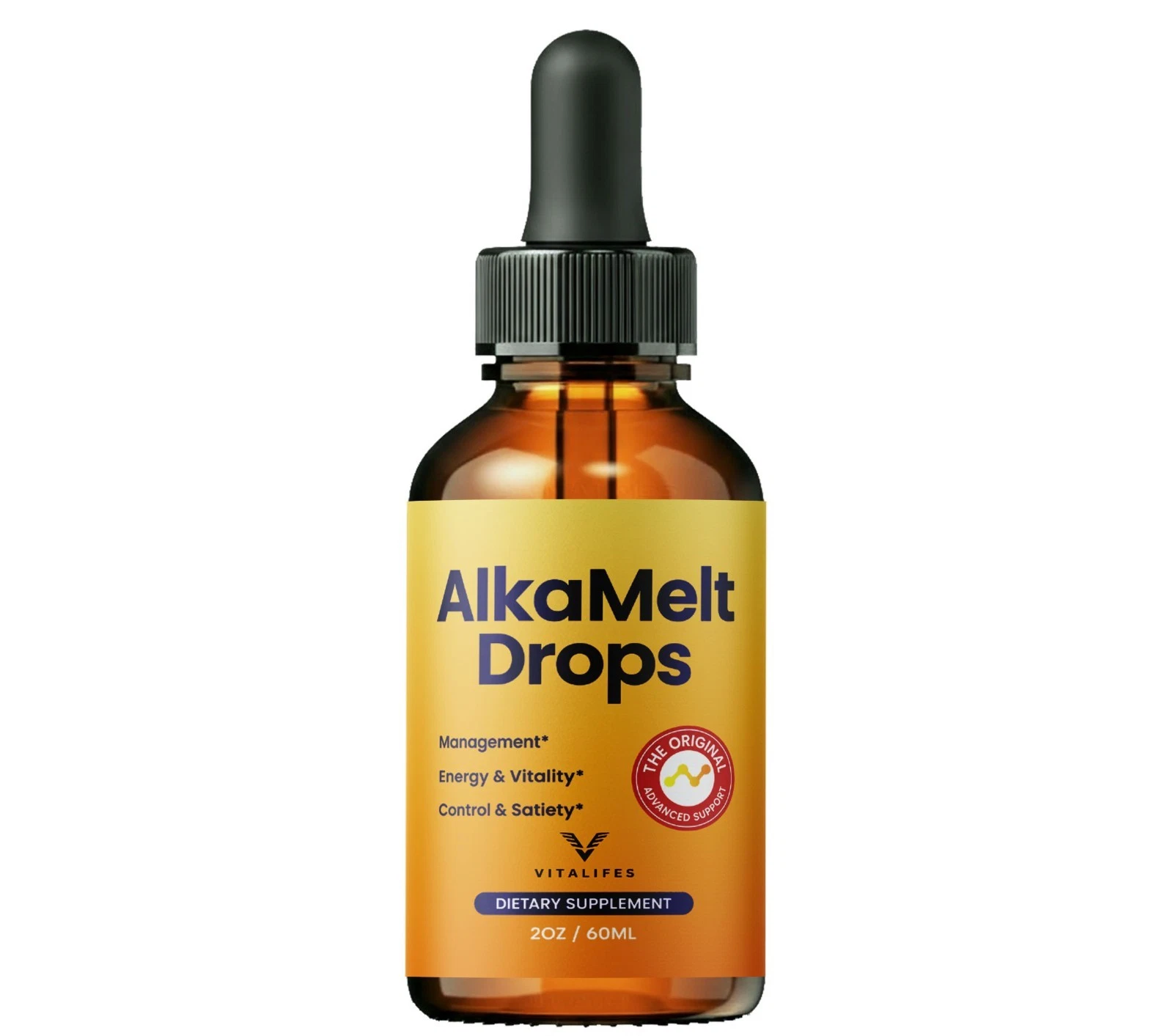
Liquid drops in a 2 oz, 60 mL amber glass bottle. Both of the seller’s ingredient lists appear on the product pages exactly as it publishes them, with the size and quality of the evidence behind each named botanical printed beside it — including when that evidence is thin.
Price at checkout on the marketplace listing · money-back guarantee as the listing prints it
Order Alka Melt Drops On The Official Website2 oz / 60 mL a bottle · serving on the bottle · lot ALK-26/GE-2938
Why a name like this ends up on a formula anyway
It is worth asking, honestly, why a plant with this thin a modern research trail appears on a supplement label at all. The likeliest answer is traditional-use inclusion: formulators drawing on eclectic and folk-herbalism reference works, which list stone root alongside horse chestnut, butcher’s broom and witch hazel as a traditional “venous tonic,” assemble a blend from that older category without every name in it having since been through modern clinical testing.
That is not necessarily bad-faith formulation. It is, however, a different basis for inclusion than “this ingredient has trial evidence,” and a label does not distinguish between the two. A reader who assumes every name on a seven-botanical list carries some clinical trial behind it, because two or three of the names genuinely do, is extending that assumption further than the evidence for stone root specifically will support.
What thin research means for safety, not just efficacy
It is worth separating two different questions that a thin evidence base blurs together. The first is whether stone root works for the venous or digestive complaints it is traditionally used for — and on that question, this page has already been direct: there is no modern human evidence either way. The second, and the one that matters more before anyone takes anything, is whether it is safe.
Here the honest answer is also “largely unknown by formal testing,” rather than “known to be safe.” No published toxicology study, no adverse-event surveillance programme comparable to the ones that exist for horse chestnut or hawthorn, and no drug-interaction literature turned up in this same search. A long traditional-use history without documented serious harm is a real, if weak, safety signal — it is not the same thing as a toxicology study, and it says nothing about interactions with modern medications that did not exist when that traditional use developed. Anyone taking a blood thinner, a blood-pressure medication, or any other prescription drug should treat an unresearched botanical exactly as they would treat any other unknown: worth mentioning to a prescriber before starting, not worth assuming is inert simply because no harm has been reported.
Reading a stone root row on any label
Two questions, because with an evidence base this thin, there is not much more to check.
- Is any clinical or trial claim attached to it? If a product page cites a study for stone root specifically, that citation is worth checking against PubMed directly — this desk’s own search found no clinical trial to cite, so any such claim deserves scrutiny.
- Is it presented as equivalent to its better-evidenced formula-mates? A label or marketing page that lists stone root in the same breath as horse chestnut or hawthorn, without distinguishing the size of the evidence behind each, is flattening a real difference.
Nothing in this record suggests stone root is unsafe at traditional culinary-adjacent use, and nothing here is a claim that the plant does nothing. It is a statement, checkable by anyone with an internet connection, about what the modern published research record currently contains: very little, and none of it a human clinical trial.
What that means for this bottle
This pack sheet names stone root with no part and no weight, which is consistent with every other name on the list. Here, though, the missing weight changes less than it does for an ingredient like horse chestnut, because there is no trial dose available to compare it against even if a weight were printed.
What this desk can say honestly is this: stone root has a genuine 19th-century traditional-use record, a small amount of unrelated modern phytochemistry, and no clinical trial evidence of any kind for any of the claims typically attached to it. The ingredients page carries this same distinction, printed beside every other name this seller publishes.
References
- Stevens JF, Ivancic M, Deinzer ML, Wollenweber E. A novel 2-hydroxyflavanone from Collinsonia canadensis. J Nat Prod. 1999;62(2):392-4. PMID 10075799. https://pubmed.ncbi.nlm.nih.gov/10075799/
- Mazzio E, Badisa R, Mack N, Deiab S, Soliman KFA. High throughput screening of natural products for anti-mitotic effects in MDA-MB-231 human breast carcinoma cells. Phytother Res. 2014;28(6):856-67. PMID 24105850. https://pubmed.ncbi.nlm.nih.gov/24105850/
- Shoemaker JV. Collinsonia Canadensis. Br Med J. 1887;2(1397):728. PMID 20752052. https://pubmed.ncbi.nlm.nih.gov/20752052/
- Collinsonia Canadensis. South Med Rec. 1888. PMID 36022907. https://pubmed.ncbi.nlm.nih.gov/36022907/