Alka Melt Drops Official Website › Blog › Reading A Bottle With No Panel
Reading A Dropper Bottle That Has No Supplement Facts Panel
Most advice about reading supplement labels assumes there is a panel to read. A surprising number of bottles, this one included, do not publish one. That changes what is knowable, and it changes what a careful buyer should do — but it does not leave you with nothing.
What a panel is for, row by row
A Supplement Facts panel is not a formality. Each of its rows answers a question a buyer would otherwise have to guess at, and it is worth seeing them listed to understand what their absence costs.
| What a Supplement Facts panel gives you | Why it matters | Available here? |
|---|---|---|
| Serving size | Turns a bottle into a daily amount and a supply length | No |
| Servings per container | The only honest way to compare two prices | No |
| Each active, by name | Decides which research applies | Two conflicting answers |
| The amount of each active | The only way to compare a row with a trial | No |
| Percent Daily Value, where one exists | Context for vitamins and minerals | Not applicable; no nutrient rows are declared |
| Other ingredients | Carriers, preservatives and common allergens | No |
| Manufacturer or distributor address | Who is answerable for the contents | Yes — the manufacturer mark is on the bottle |
Six of the seven rows a panel would supply are unavailable for this bottle, because no panel has been published for it.
The row that does the most work is the fourth. An amount against an active is the only thing that lets a reader compare a product with the research it borrows its reputation from. Without it, the plant name on the front is a reference to a literature rather than a claim about a dose.
The FDA's questions and answers for supplement buyers and the NIH Office of Dietary Supplements consumer sheet are both written on the understanding that a panel exists. They are still worth reading — they explain what the words on these products are permitted to mean — but their practical advice assumes a document that is not always there.
What is left when there is not one
More than nothing, and less than a buyer would like. The useful move is to stop trying to establish the contents and start establishing the accountability.
| What you can still check | How | What a good answer looks like |
|---|---|---|
| The net contents | Printed on the front label | A volume, here 2 oz / 60 mL |
| The serving actually directed | The back of the bottle that arrives | A stated number of drops or millilitres, and a frequency |
| Who made it | The manufacturer mark on the label | A named company you can search for |
| Who sold it to you | The website and the order paperwork | A company name, a postal address and a telephone number that answers |
| The return route | The listing you bought from, in week one | A stated window in days and an address to post to |
| The lot reference | Printed on the bottle or the carton | A code that matches the one on your paperwork |
None of these tells you what is in the liquid. All of them tell you whether there is somebody to ask.
That second table is the one to carry. It cannot tell you whether the hawthorn in a bottle reaches the amount that beat placebo. It can tell you whether there is a named company, a postal address and a telephone number behind the product, which is what matters most on the day something goes wrong.
This is a lower bar than a panel, and it is honest about being one. A product that clears it is a product with somebody to complain to. A product that fails it is a card form with a picture of a bottle above it.
Reading a front label properly
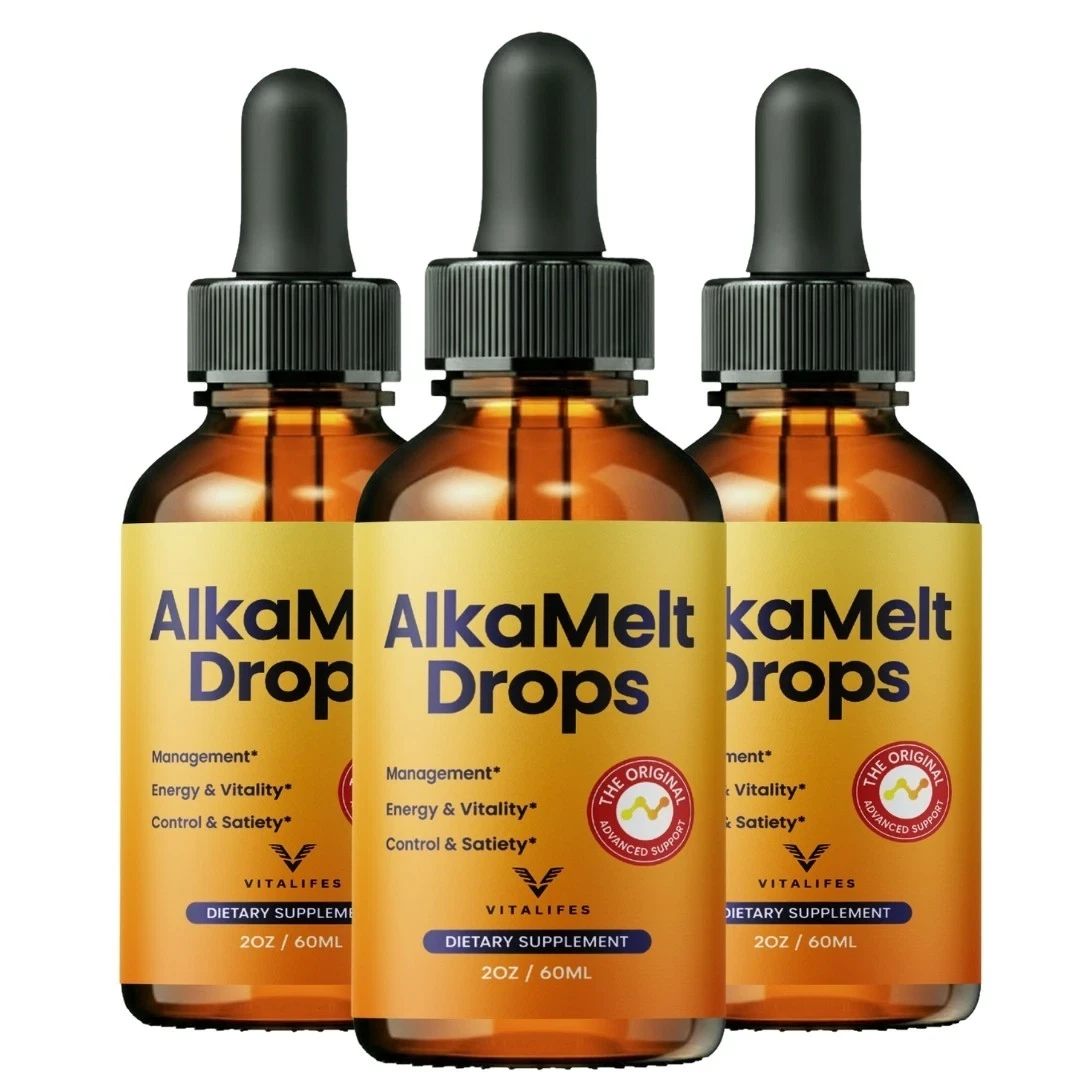
A front label is designed to sell rather than to inform, and it still repays close reading. Here is what this one prints, and what each element is worth.
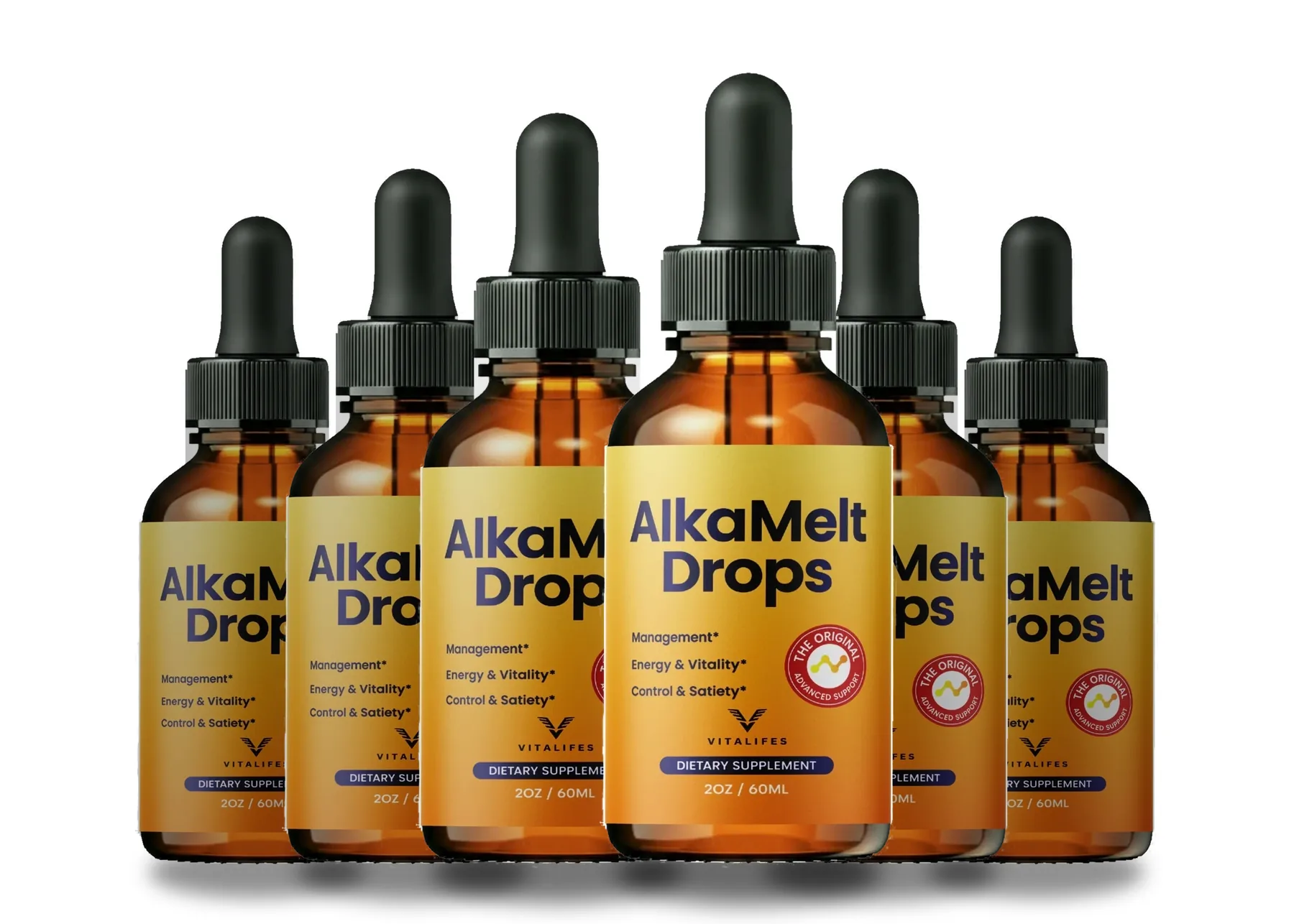
- The product name. Set large. On this bottle it is AlkaMelt Drops, which differs slightly from the name the listing sells under — a small thing, worth noticing when matching a bottle to an order.
- Three short support phrases. Management, Energy & Vitality, Control & Satiety. Each carries a reference mark pointing at the standard dietary-supplement statement. The first is printed as a single word without the noun it would normally take, which is a compression, not a claim.
- A roundel. THE ORIGINAL, ADVANCED SUPPORT. A design element with no regulatory or factual content.
- The manufacturer mark. VITALIFES, with its device. This is the most useful thing on the front: it names a company that can be searched for.
- The category. DIETARY SUPPLEMENT, in a bar. This tells a reader which rules apply — a supplement may describe support for a normal body function and may not promise an outcome.
- The net contents. 2OZ / 60ML. The only quantity on the bottle, and the basis for every piece of arithmetic anyone can do about it.
Six elements, of which one is a searchable fact, one is a quantity, one tells you which regulatory framework applies, and three are marketing. That ratio is typical and it is worth recognising quickly.
Order Alka Melt Drops from the desk that prints both lists
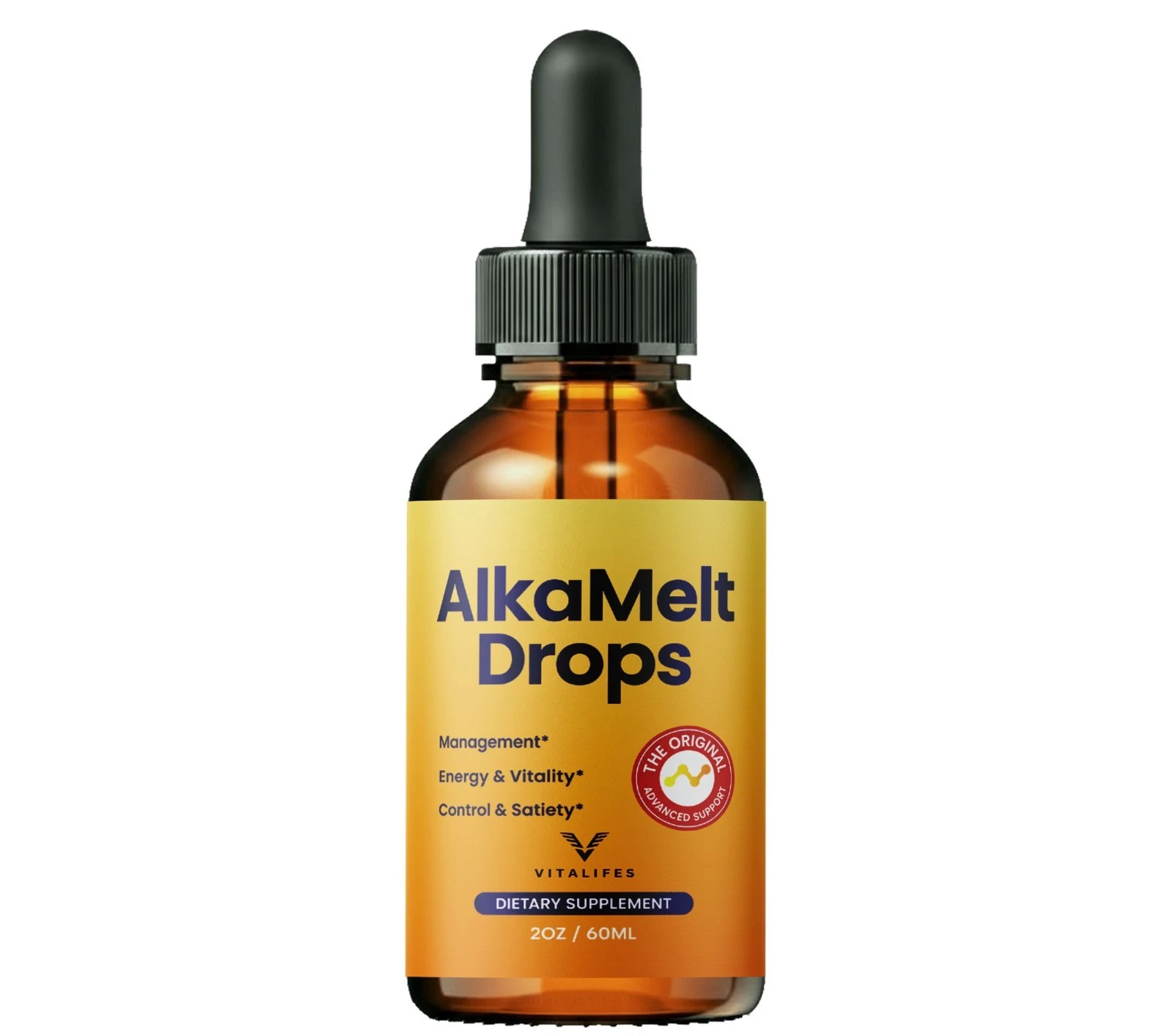
Liquid drops in a 2 oz, 60 mL amber glass bottle. Both of the seller’s ingredient lists appear on the product pages exactly as it publishes them, with the amount each named botanical’s trials used printed beside it.
Price at checkout on the marketplace listing · money-back guarantee as the listing prints it
Order Alka Melt Drops On The Official Website2 oz / 60 mL a bottle · serving on the bottle · lot ALK-26/GE-2938
The three questions worth asking a seller
A buyer who sends one email should send these three, and the answers — including the non-answers — are informative.
- What is the serving size, and how many servings are in the bottle? This is the question a panel would answer in its first line. A seller that cannot answer it has not decided what the product is.
- Which ingredient list is correct? Where two exist, as they do here, this is the whole question. A seller that names one and withdraws the other has resolved the most important ambiguity about its own product.
- Is there a certificate of analysis for my lot? Not every seller has one, and asking is not unreasonable. The answer tells you how far the supply chain has been documented.
Send those three, note which come back with a figure, and weigh the reply as part of the purchase. A desk that answers all three is a different proposition from one that answers none, regardless of what is in the liquid.
The part of the risk that has nothing to do with the plants
Most writing about supplement safety is about ingredients. The larger share of the documented harm in this category is about supply and about interactions, and both are worth a paragraph.
A national study of emergency department visits estimated tens of thousands of visits a year in the United States linked to supplement adverse events, with slimming and energy products prominent. A review of liver injury from herbal and dietary supplements documents a rising share of drug-induced liver injury attributed to this category, again with slimming products over-represented.
Interactions are the mundane end of it, and the one most likely to matter to an individual reader. A systematic review of warfarin interactions catalogues how many ordinary supplements alter anticoagulation, and hawthorn has a measured interaction with digoxin. Hawthorn is on the first of this seller’s two lists, which is a specific reason for a specific conversation with whoever writes your prescriptions.
Naming the interaction once, precisely, is more useful than a general caution repeated on every paragraph. The interaction is digoxin and anticoagulants. Say the name of the medicine to the prescriber, and the conversation takes a minute.
Deciding, on the information that exists
This website sells the bottle, so the concluding paragraph has an obvious interest behind it and is written to be useful anyway.
What exists: a named manufacturer, a named stocking partner with a postal address, an order desk with a telephone number, a returns address, a lot reference, a front label printing a volume, and two ingredient lists that disagree. What does not exist: a panel, an amount for anything, a serving size, and a published price on this website.
A reader who needs to know what is in a bottle before taking it should wait for the panel, and should apply that standard to every product rather than only this one. A reader who is content with a seller they can reach, an amount of liquid they can measure and a return route they have read has enough to decide with.
Either way the decision should be made on the documents that exist rather than on the artwork, and the documents are the ones listed above. That is the whole skill, and it transfers to every bottle on the shelf.
- Stop trying to establish the contents; establish who is accountable for them.
- The front label’s useful content is the manufacturer mark and the net contents.
- Ask three questions: serving size, which ingredient list, and a certificate of analysis.
- Read the back of the bottle that arrives — it outranks every page on any website.
- Name any medicine you take to a prescriber before the first serving, once, precisely.
References
- Dietary Supplements: What You Need to Know. Office of Dietary Supplements, National Institutes of Health. https://ods.od.nih.gov/factsheets/WYNTK-Consumer/
- Questions and Answers on Dietary Supplements. U.S. Food and Drug Administration. https://www.fda.gov/food/information-consumers-using-dietary-supplements/questions-and-answers-dietary-supplements
- Navarro VJ, et al. Liver injury from herbal and dietary supplements. Hepatology. 2017;65(1):363-373. PMID 27677775. https://pubmed.ncbi.nlm.nih.gov/27677775/
- Geller AI, et al. Emergency Department Visits for Adverse Events Related to Dietary Supplements. N Engl J Med. 2015;373(16):1531-40. PMID 26465986. https://pubmed.ncbi.nlm.nih.gov/26465986/
- Tan CSS, Lee SWH. Warfarin and food, herbal or dietary supplement interactions: A systematic review. Br J Clin Pharmacol. 2021;87(2):352-374. PMID 32478963. https://pubmed.ncbi.nlm.nih.gov/32478963/
- Tankanow R, et al. Interaction study between digoxin and a preparation of hawthorn (Crataegus oxyacantha). J Clin Pharmacol. 2003;43(6):637-42. PMID 12817526. https://pubmed.ncbi.nlm.nih.gov/12817526/