Alka Melt Drops Official Website › Blog › Does Alka Melt Drops Really Work?
Does Alka Melt Drops Really Work? What Each Name Was Tested For
Quick answer. Nobody has tested Alka Melt Drops itself. The label prints no amounts, so its eleven named ingredients cannot be matched to the doses used in trials. Only apple cider vinegar has human weight data, and the effect was modest. It does not burn fat or cause weight loss. Expect a small change at best, if any.
Curious enough to run a fair six-week test? The checkout shows the packs, the price and the return terms.
See today’s price and guarantee
Price is set at the seller’s checkout. This website earns money when you order through it.
- No trial of the finished bottle exists. The label states no amount for any ingredient.
- Eleven names appear across the seller’s two graphics: seven on one, four on the other.
- Apple cider vinegar is the only name with human weight data. The pooled effect sits at 30 mL a day.
- Stone root has no clinical trial, and raspberry ketones have never been tested in people.
- The seller’s own buyer summary says most people wait 3–6 weeks before judging.
What does works mean when the bottle is a supplement?
A supplement may not claim to treat anything. So the question is narrow. Which measurable thing would move, by how much, and after how long?
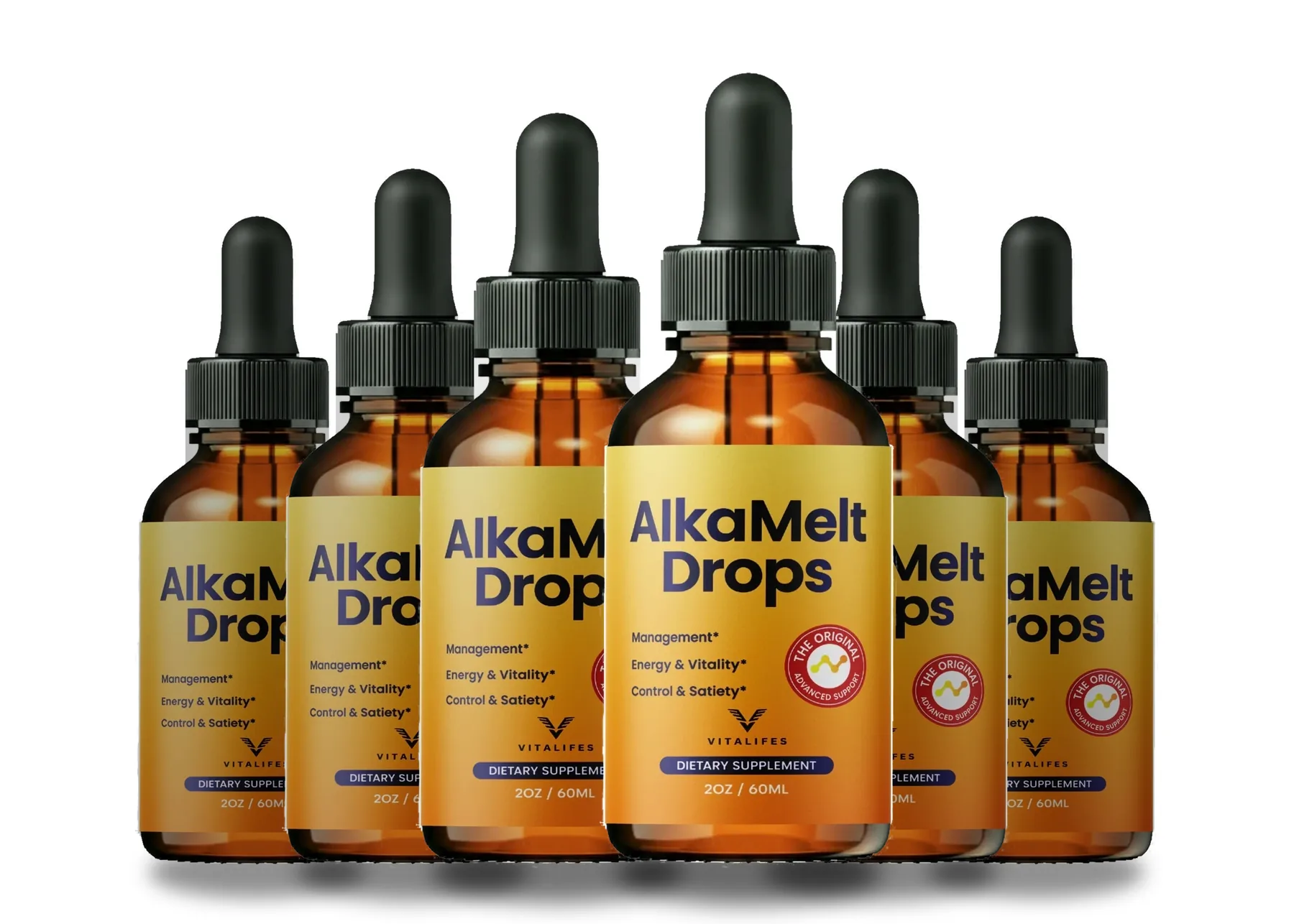
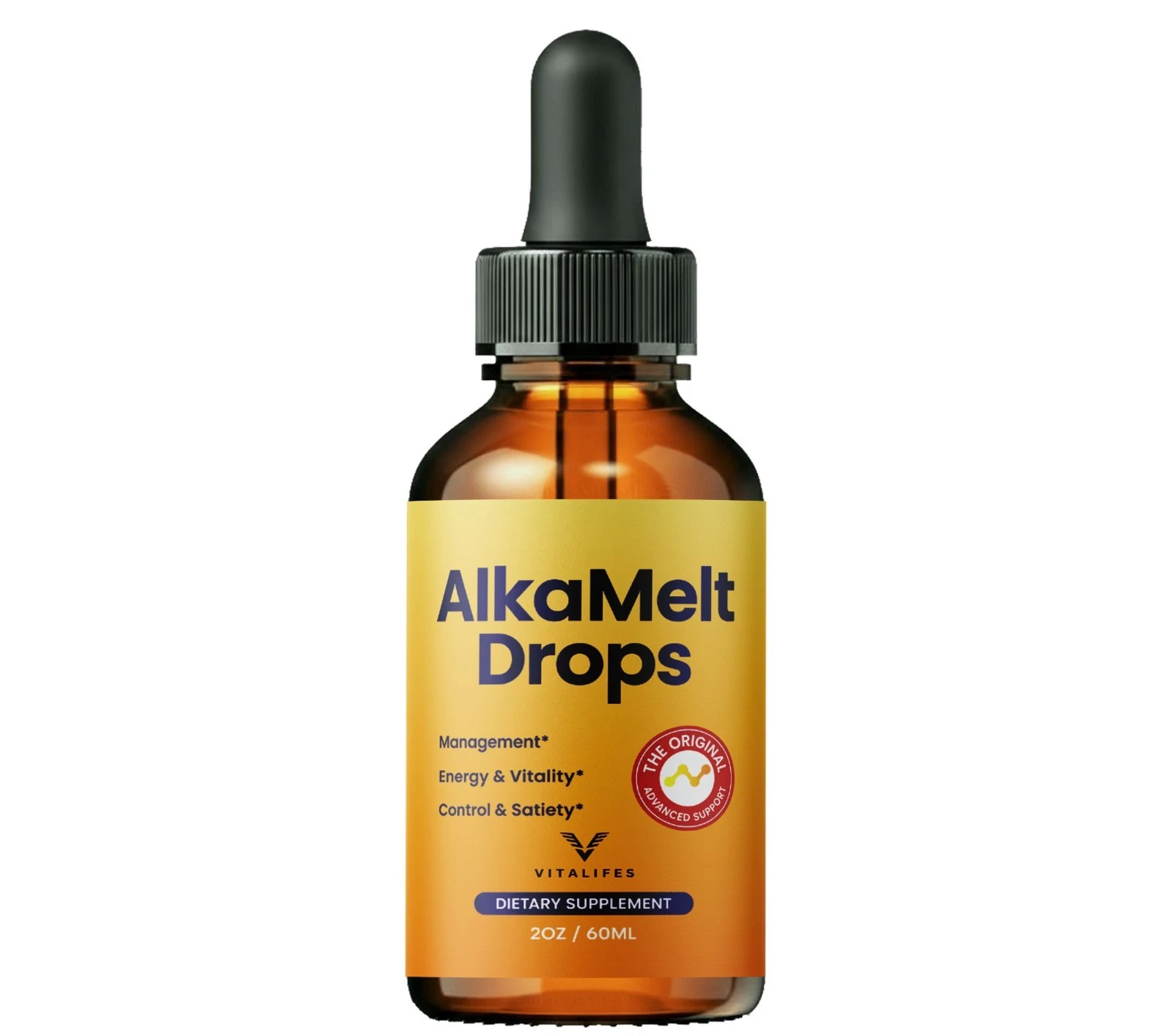
The label prints three short phrases: Management, Energy & Vitality, and Control & Satiety. The seller’s panels expand these into eight support statements, such as supports healthy metabolism and supports appetite control. Those are statements about normal body functions. They are not promises of a result.
The product is not a drug. It does not burn fat, and it does not cause weight loss. The seller sets that ceiling itself, and we stay under it.
Has anyone tested Alka Melt Drops on people?
No trial of this bottle is cited anywhere in the seller’s material. What exists is research on single ingredients, each at a stated dose. That research is useful, but only if the bottle holds a similar amount. It does not say.
The label prints no amount for any of the eleven names. A 2 oz / 60 mL bottle is about 2 mL a day over a month. Picture the trial amounts side by side: 100 mg of escin, 180 mg of gotu kola triterpenes, 1,200 mg of motherwort oil extract, 1,800 mg of hawthorn extract and 2,000 mg of bitter melon. They do not fit into about 2 mL.
So any page that says the bottle works because ingredient X works in a trial is skipping a step. The step is the dose.
What was each named ingredient tested on?
| Name | On the label | What the research used or found |
|---|---|---|
| Gotu kola (leaf) | No amount | 180 mg a day of the triterpenic fraction, split into 60 mg three times a day. A lower arm of 30 mg did less |
| Chinese hawthorn (fruit) | No amount | WS 1442 extract at 1,800 mg a day beat placebo on maximal workload. Half that amount did not |
| Horse chestnut (seed) | No amount | Escin at 100 mg a day over 12 weeks drew level with compression stockings on leg volume |
| Stone root (root) | No amount | No clinical trial at any dose |
| Motherwort | No amount | Motherwort oil extract, 1,200 mg daily for 28 days, in a single study |
| Butcher’s broom (root) | No amount | The trial gives only a monograph dose |
| Grape seed | No amount | Results vary with dose and length across 19 controlled trials |
| Apple cider vinegar | No amount | Vinegar at 15 mL or 30 mL a day for 12 weeks. Pooled results lean on the 30 mL end |
| Raspberry ketones | No amount | No human trial. In mice it did not cut fat beyond what eating less explained |
| Wild yam (root) | No amount | A single placebo-controlled trial saw no shift in weight, blood fats, glucose or hormones |
| Bitter melon (fruit) | No amount | A dose of 2,000 mg a day over three months, in adults with type 2 diabetes |
The right-hand column shows amounts that studies used. None of these amounts is claimed for this bottle.
Look at the middle column. It is blank in every row. That blank is why the honest answer to “does it work” is “unknown”.
Is there any weight evidence behind the names?
One name stands out. Apple cider vinegar has randomised human data on body weight. A 12-week trial gave 15 mL or 30 mL a day and measured weight and belly fat. The 2025 meta-analysis found the pooled effect sat at the 30 mL end, which is two tablespoons a day. An eight-week trial of red wine vinegar improved glucose handling but did not reduce body fat.
Even there, the change was modest. And vinegar sits on only one of the seller’s two lists.
The seven names on the other list are mostly studied for leg swelling and vein health. Horse chestnut, gotu kola, butcher’s broom and grape seed belong to that research. It measures ankle size and leg volume, not body weight. If those names are in your bottle, a scale could move a little from less retained fluid, but that is water, not fat.
What results and before-and-after changes are realistic?
The seller’s own roster lists eight buyers but only two different comments. One says the daily habit stuck and buyers reordered early. The other calls the first month fair and the first week slow.
That is an honest picture. The habit is easy to keep with a dropper. A visible change, if one comes, is small and slow. We publish no before-and-after photos, because none came with the product and we will not invent any.
- Week one: nothing to look for. No ingredient on either list has a first-week effect.
- Week two: check the habit, not the result. Are you taking it every day?
- Week six: the first fair comparison against a number you wrote down on day zero.
- Week twelve: where most of the trials stopped looking.
Write one measure down before the first serving. Weigh yourself once a week, same day, same clothes. Change nothing else in the same fortnight. Decide at week six against the sheet, and check your return window while it is still open.
Will it give you energy, curb your appetite or help your gut?
The seller lists support statements on energy, focus, appetite, digestion and gut health. The research behind the named ingredients is thin for all of these.
- Appetite: the vinegar trials measured body weight over twelve weeks, not appetite directly.
- Energy: neither list holds a stimulant, so do not look for a caffeine-style kick.
- Focus: the pooled gotu kola work on thinking and mood exists but is weak.
- Digestion and gut: no trial of any named ingredient used a digestive score or microbiome measure.
None of this means the bottle does nothing. It means the claims rest on tradition and on plausible mechanisms, not on a measured result for this liquid.
Which published facts bear on results?
| Item | What is published |
|---|---|
| Serving size | Left out. The seller only says to follow the bottle |
| Amounts per ingredient | Left out for all eleven names |
| Typical wait | Most buyers wait 3–6 weeks, says the distributor |
| Price | Shown only on the checkout screen |
| Guarantee | Refund promise; the listing sets the length and no day count is given |
| Seller support statements | Eight. All are about normal body functions |
Where do these facts come from?
The research below is cited by the seller. None of it is a trial of this bottle.
- The 12-week vinegar trial
- The 2025 meta-analysis of apple cider vinegar
- An eight-week vinegar trial that measured body fat
- The 1996 Lancet trial against compression stockings
- The WS 1442 dose-comparison trial
- The dose-ranging gotu kola trial
- A 2000 mg/day bitter melon trial
- The best-controlled raspberry ketone animal study
- The placebo-controlled wild yam trial
- The Cochrane review of phlebotonics
- The FDA's questions and answers on dietary supplements
Frequently asked questions
Does Alka Melt Drops work for weight loss?
Nothing shows that it does. The label does not claim weight loss, and no trial of the bottle exists. The only name with human weight data is apple cider vinegar, and the effect was modest at 30 mL a day, far more than this bottle holds per serving.
Does Alka Melt Drops burn fat?
No. The seller itself says it does not burn fat and does not cause weight loss. A line promising burned calories is on its artwork, and this site does not repeat it.
How long does it take to see results?
Buyers in the seller’s own summary report 3–6 weeks. Studies of the named ingredients lasted anywhere from four to sixteen weeks. A fair first test is six weeks against a written baseline.
Is there a weight management claim on the label?
The label prints Management on its own, without the noun that would normally follow, and the phrases Energy & Vitality and Control & Satiety. Each carries a mark pointing to the standard dietary supplement statement.
What if it does nothing for me?
Use the money-back route. Call +1 (302) 200-3480 with your order ID before the window on your listing closes.
Should I take more to make it work faster?
No. With no declared amounts, taking more means multiplying an unknown. Stick to the serving on your own bottle.
Our view
Does it work? The honest answer is that nobody knows, and the label makes it impossible to find out from outside. The pieces have some research. The whole bottle has none.
If you want a weight tool, the best-supported item here is plain vinegar at a stated amount, and it is cheap. If you want the dropper habit and are curious, test it fairly and keep your expectations small.
Do not buy it expecting fat to melt. Buy it, if you do, as a low-stakes experiment with a return route you have read in advance.
Alka Melt Drops is a dietary supplement. It is not FDA approved, and no supplement is. These statements have not been evaluated by the Food and Drug Administration. This product is not intended to diagnose, treat, cure or prevent any disease. This page is general information, not medical advice. If you take a medicine, are pregnant or nursing, or have a health condition, ask your doctor before you use it.
If you want to try it, read the return window on the checkout page first, then start your six-week clock on the day it arrives.
See today’s price and guarantee
Price is set at the seller’s checkout. This website earns money when you order through it.